Chełm, the Capital of King Danylo
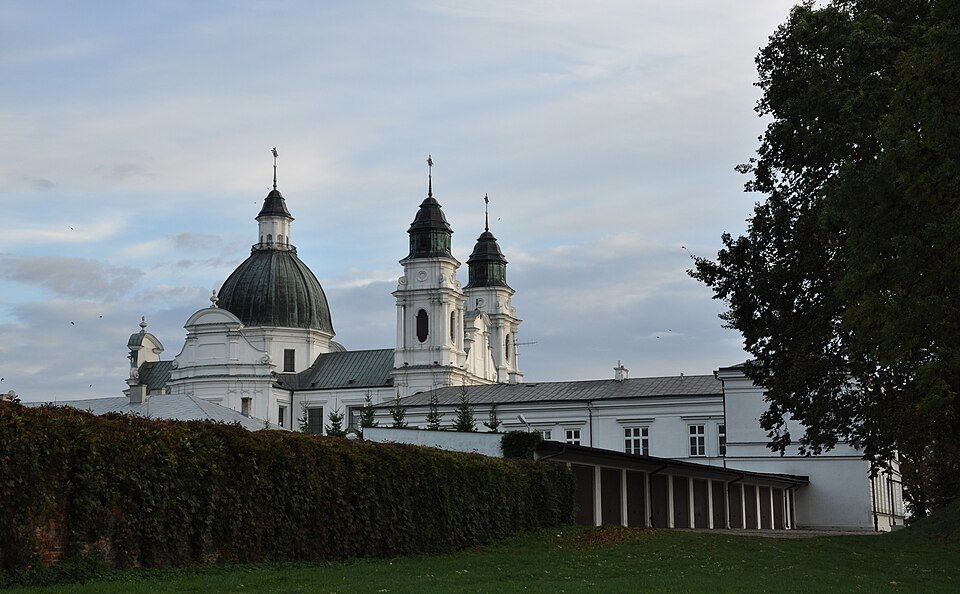

The city Danylo Romanovych built for himself as a capital — and where he was buried.
In 1237 Danylo Romanovych set a fortified castle here and made it his residence: Volodymyr he left to his brother Vasylko, while Chełm, as the chronicle stresses, he built himself. The historian Volodymyr Aleksandrovych dates the town to the late 1230s and says it arose on the site of an earlier unfortified settlement. Danylo was crowned not here but in Dorohychyn at the end of 1253, by the papal legate Opizo; in Chełm he was buried — in the Cathedral of the Nativity of the Mother of God, which he himself enlarged. Nothing princely remains in today’s cathedral: the present one was built in 1736–1756 in late Baroque. The High Hill, called Danylo’s Hill until 1944, is the site of the princely residence, and excavations continue there; a separate stone tower stands by the road in Stovpia. Danylo’s descendants held Chełm until 1387, when the town passed to Poland and ceased to be a capital. The Chełm land remained Ukrainian into the mid-twentieth century: before 1944 more than 700,000 Ukrainians lived in the Zakerzonnia region, today about a hundred thousand. The Lublin agreement of 9 September 1944 opened the "exchange of population" — in 1944–1946 some 482,000 people were resettled to the Ukrainian SSR, mostly by force; on 28 April 1947 Operation Vistula began and scattered another 137,000–150,000 across northern and western Poland. The Chełm icon of the Mother of God, which Danylo brought here, is now in the Museum of the Volhynian Icon in Lutsk.
Chełm, Lublin Voivodeship, about 25 km from the Ukrainian border. The cathedral and the High Hill are in the town centre; the tower at Stovpia is 10 km to the west.