Mound of the Executed Haidamakas, Kodnia
_2.jpg)
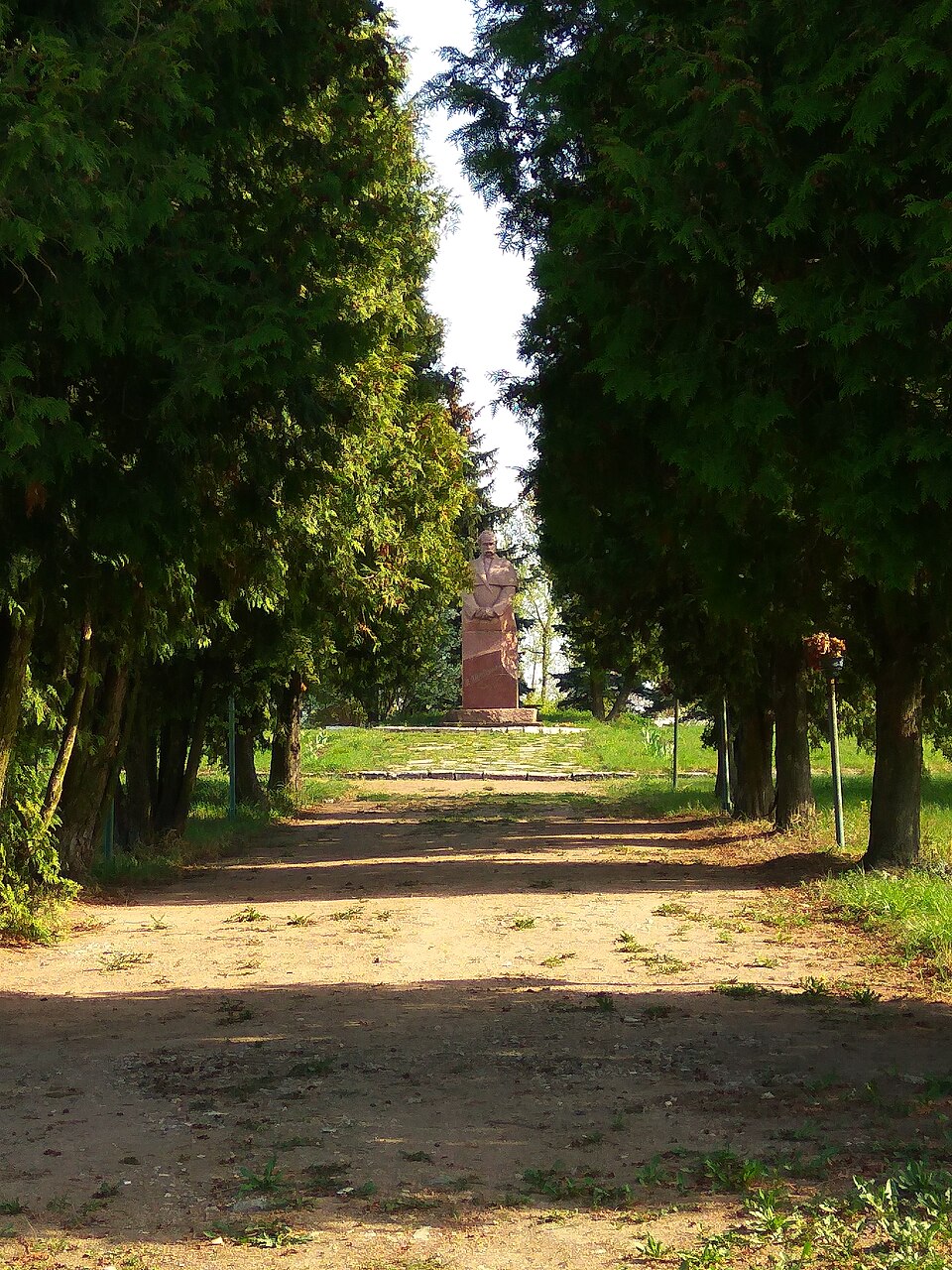
The Kodnia tribunal of 1768: after the Koliivshchyna, rebels were beheaded, hanged and impaled here.
In 1768, after the suppression of the Koliivshchyna, a Polish tribunal in Kodnia headed by Crown commander Józef Gabriel Stempkowski tried and executed participants of the haidamaka uprising: beheading, the gallows, the stake, quartering. According to the "Kodnia Book" — the only surviving court record, covering 336 cases, published by the Archaeographic Commission of the All-Ukrainian Academy of Sciences (VUAN) in 1931 — 218 people were sentenced to death: 151 beheaded, 57 hanged, one impaled; researchers suppose the real number executed over the tribunal's four years of work exceeded three thousand, and the Encyclopedia of Modern Ukraine (ESU) gives "about three thousand". Local tradition speaks of three graves, of which one survives; the saying "May holy Kodnia take you" lived on among the people. At the burial site beyond the village stands a memorial mound with a granite block inscribed "Eternal glory to the people's fighters of the Koliivshchyna 1768–1968", unveiled on 29 June 1968.
An open-air mound by the Zhytomyr–Berdychiv road, signposted; access around the clock. Nearby in the village is the Church of the Nativity of the Theotokos of 1841.