Hutsul Museum, Kosiv
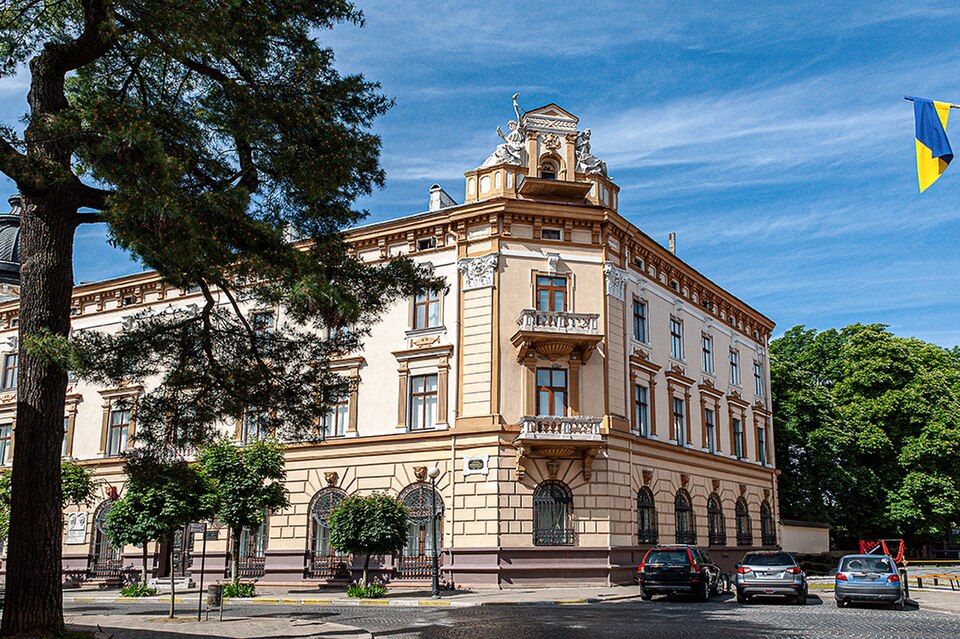

Sahaidachnyi's collection and Kosiv painted ceramics — UNESCO intangible heritage.
The museum was founded in 1969 as a branch of the Kolomyia museum on the basis of the private collection of the artist and art historian Yevhen Sahaidachnyi; today it is a department of the Kobrynskyi National Museum of Folk Art of Hutsulshchyna and Pokuttia. The holdings number about five thousand works of the 19th–20th centuries: ceramics, wood carving, leather and metal, Hutsul dress and embroidery, works by the Shkribliak masters. The museum occupies the former rabbis' house of the Jewish community. In 2019 the tradition of Kosiv painted ceramics — vessels of grey and white clay painted with a metal stylus in a green-and-yellow palette — was inscribed on UNESCO's Representative List of Intangible Cultural Heritage; the museum has Ukraine's first ceramics exhibition adapted for the visually impaired, and on 23 October 2025 it opened a renewed interactive hall of woodwork. The tales about the opryshky of these mountains were preserved by the “Ethnographic Collection” of the Shevchenko Scientific Society: in 1910 Volodymyr Hnatiuk published 258 records, 104 of them from Petro Shekeryk-Donykiv of the village of Holovy.
55 Nezalezhnosti Street. Tue–Sun 10:00–18:00, closed Monday; ticket 100 UAH, concession 50, tickets online.