Verkhnii Saltiv
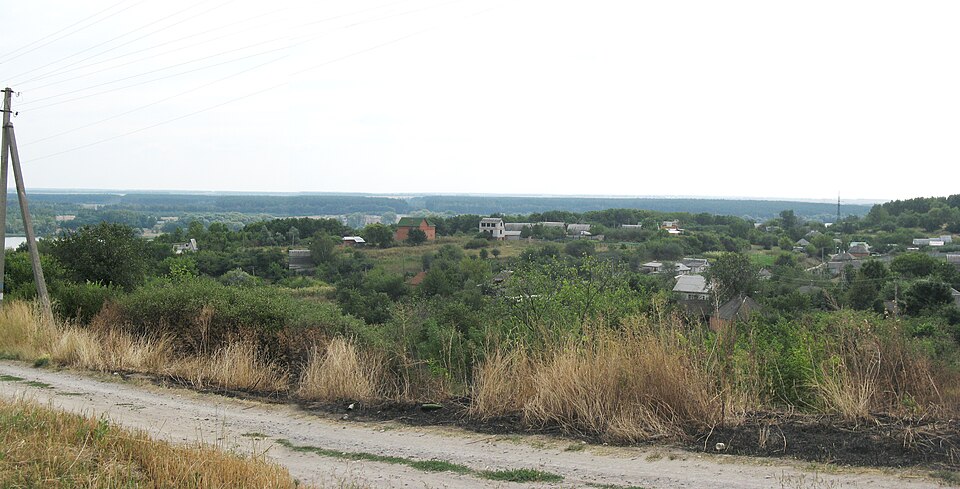

A hillfort and catacomb cemeteries of the Khazar age that gave their name to a whole archaeological culture. The museum stands without a roof.
The Saltiv (Saltovo-Mayaki) culture is named after this village, and this is where it was first seen: in 1900 the teacher Vasyl Babenko and the peasant Vasyl Kapinos dug the first catacomb burials on Kapinos’s plot, and the finds were reported while the 12th Archaeological Congress in Kharkiv was being prepared in 1902. The Encyclopedia of Modern Ukraine dates Babenko’s systematic excavations from 1901; later the site was dug by Dmytro Bahalii, Mykola Makarenko and Dmytro Berezovets. The complex is a hillfort, settlements and catacomb cemeteries of the 8th–10th centuries: Ukrinform writes of about a hundred hectares and no fewer than thirty thousand catacombs, the Encyclopedia of Modern Ukraine of more than forty thousand; by 1917 325 catacombs had been excavated, 255 of them by Babenko himself, and by 1940 four to five hundred in all. This is the western edge of the Khazar Kaganate, and the line is worth drawing precisely: the archaeologist Oleksii Komar says the tribes here paid the kaganate tribute but were not part of its state, and that the kaganate itself could not have arisen before the 630s. According to Ukrinform, in the 8th and early 9th century it reached from the North Caucasus to the Middle Volga and from the Volga to the Dnipro; it fell to Sviatoslav’s campaigns of 965 and 967. The museum traces its beginning to 1899 and Babenko’s initiative: it became a museum-reserve in 1997, took its present name in 2005, and held about four thousand items.
Border country under shelling, and the museum is not working. This is a card to read, not a trip to plan: do not route yourself here.