Sahryń, Kholm Region
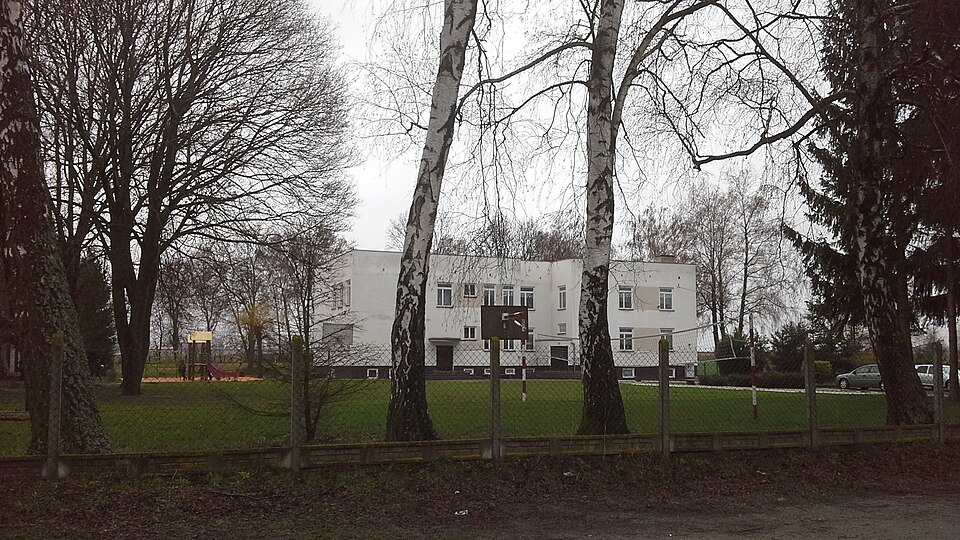

On 10 March 1944 the Home Army and Peasant Battalions destroyed the Ukrainian village — the blackest day of the Kholm region.
At dawn on 10 March 1944 Home Army units under Zenon Jachymek 'Wiktor' and Peasant Battalions under Stanisław Basaj 'Ryś' burned Sahryń; that day and the next another fifteen or so Ukrainian villages of the Hrubieszów area burned — Łasków, Szychowice, Modryń, Miętkie, Terebiń, Turkowice and others. The dead of Sahryń are counted differently: 606 established names in the project of Ihor Halahida and Myroslav Ivanyk, 661 names on the memorial, 800–1,000 according to the Ukrainian Institute of National Remembrance, about 300 according to Polish historians. Over 1,200 Ukrainians of the Kholm region died that day. The monument with names at the Orthodox cemetery was raised in 2008–2009 by the Volyn society 'Kholmshchyna'; on 8 July 2018 President Petro Poroshenko officially opened the memorial. The church of 1878 survived — today a Roman Catholic church.
Orthodox cemetery in the village of Sahryń, Werbkowice commune, Hrubieszów county, Lublin voivodeship. The Ukrainian side has applied to the Polish IPN for search and exhumation work in Sahryń, but as of 15.07.2026 there was no permit (kresy.pl, 15.07.2026). If the work begins, part of the site may be temporarily inaccessible.