Univ Lavra
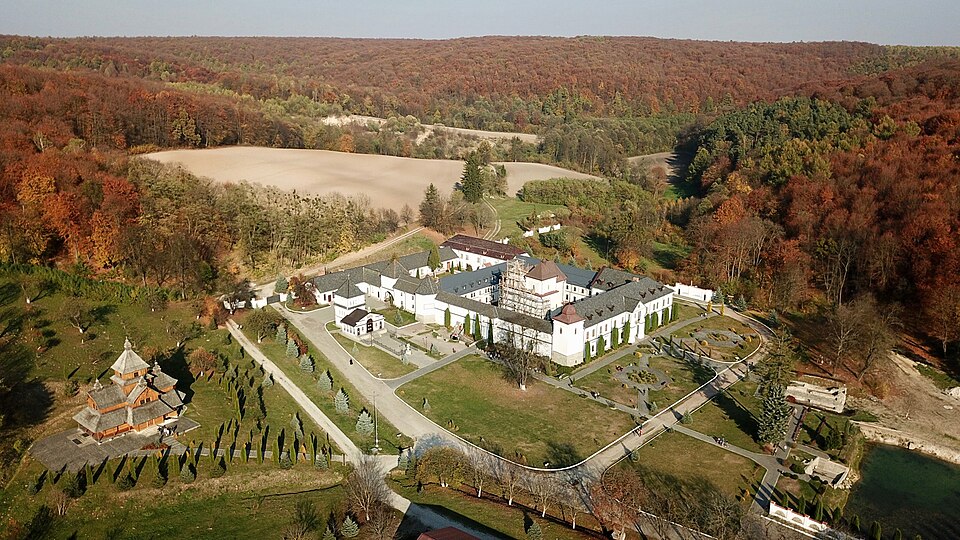

A fortified monastery with towers, next door to Svirzh.
Archaeological finds point to a monastery here from the late 13th century, and the first written mention dates from 1395; after it was burned by the Tatars in 1549, the monastery was rebuilt by the Galician nobleman Oleksandr Vanko Lahodovsky. Legend: he was healed by the water of a spring that still flows near the altar of the church. The fortified masonry church was completed no later than the 1570s, and soon four corner towers joined by walls were built. The monastery flourished in the time of the Archimandrites Varlaam and Atanasii Sheptytsky; its printing house operated in 1647–1770. In 1790 the Austrian authorities closed the monastery; later it was a residence of the metropolitans, which Andrei Sheptytsky gave to the Studites — in 1919 according to the Studites' website, in 1913 according to the UGCC map. After 1946 it housed a concentration camp for Catholic clergy, later a psychoneurological care home; in 1991 the church was returned to the monks. Today it is an architectural monument of national significance with a museum of sacred art.
A working Studite monastery: Divine Liturgy on weekdays at 7:30, on Sunday at 9:00 and 11:00 (2026); during Great Lent and on major feasts the schedule is different.